septic-1

A septic system is an on-site wastewater treatment system used when a property isn’t connected to a municipal sewer. Installing one is a structured process involving planning, excavation, and careful setup to ensure safe treatment of waste and protection of groundwater.

Here’s a clear breakdown of how septic system installation works:

1. Site Evaluation & Permits

Before anything is installed:

  • A soil test (called a percolation test) is done to measure how well the ground absorbs water.
  • Local health or environmental authorities review the design.
  • Permits are required (rules vary by region, including in Ontario).

This step determines the size and type of system you can install.

We can design, acquire all permits and install all types of sewage systems for residential and commercial properties.
2. System Design

A septic system typically includes:

  • Septic tank – holds and separates solids from liquids
  • Drain field (leach field) – disperses treated wastewater into the soil
  • Pipes and distribution box

The system and design depends on:

  • Number of bedrooms and size of dwelling (proxy for water usage)
  • Soil type
  • Property size and slope
  • Proximity to conservation and/or flood plains

3. Excavation

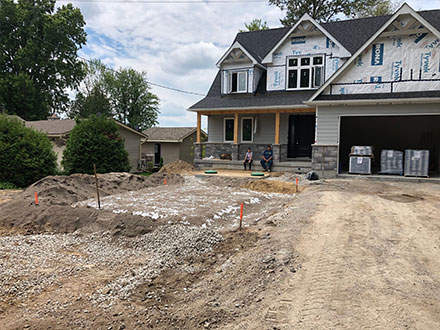
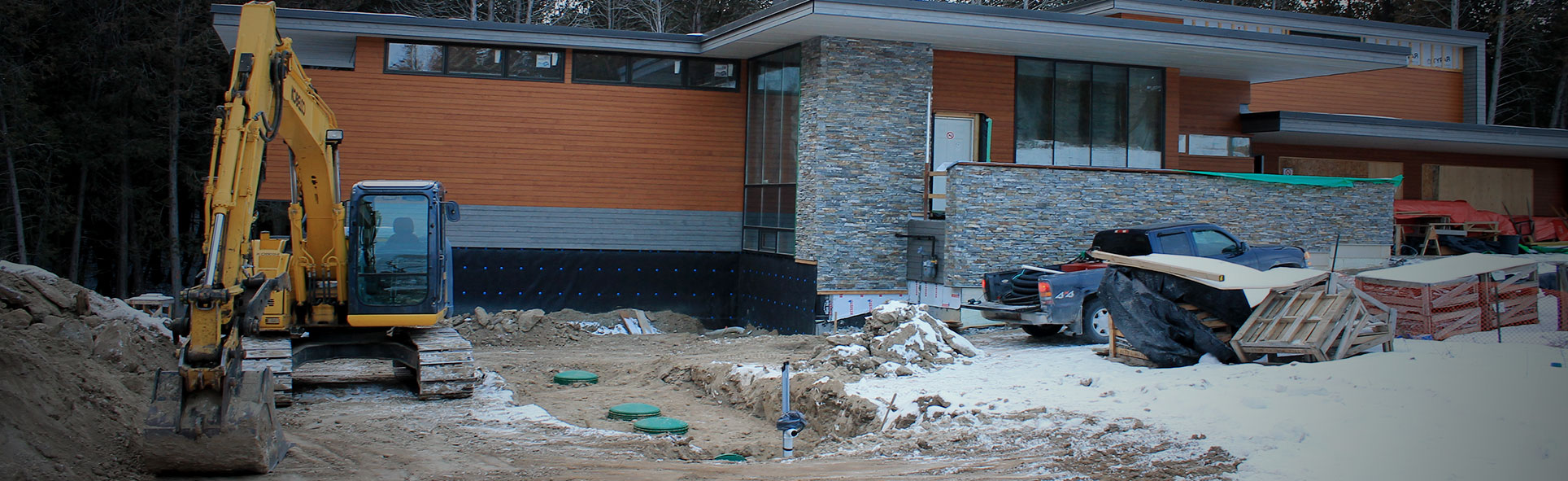
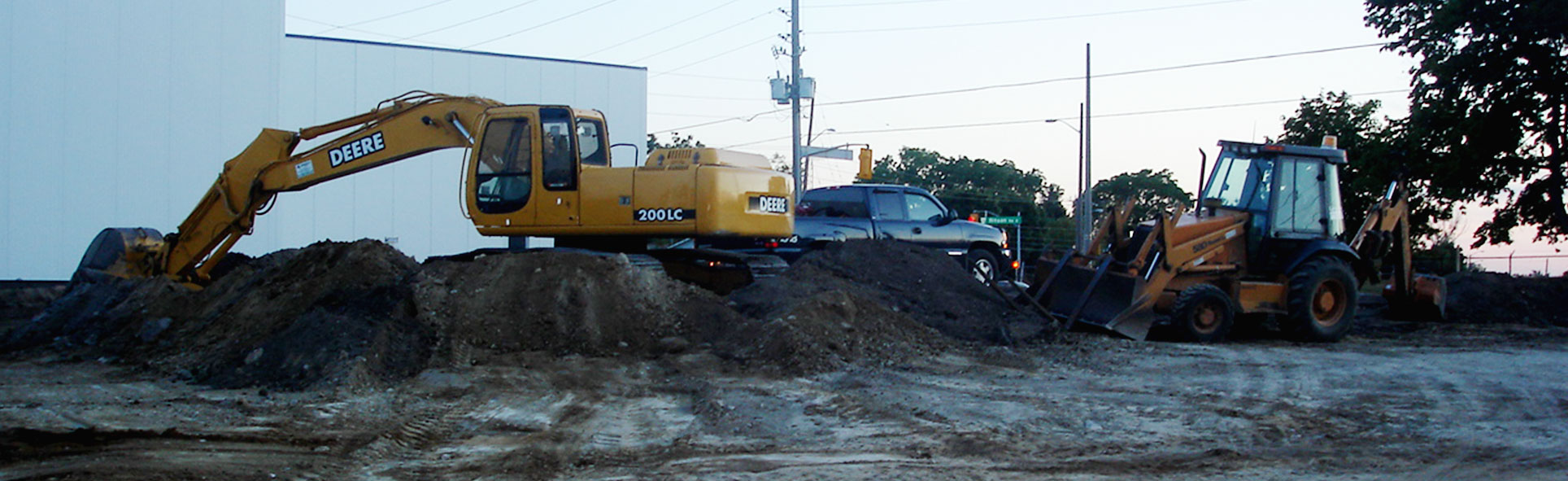
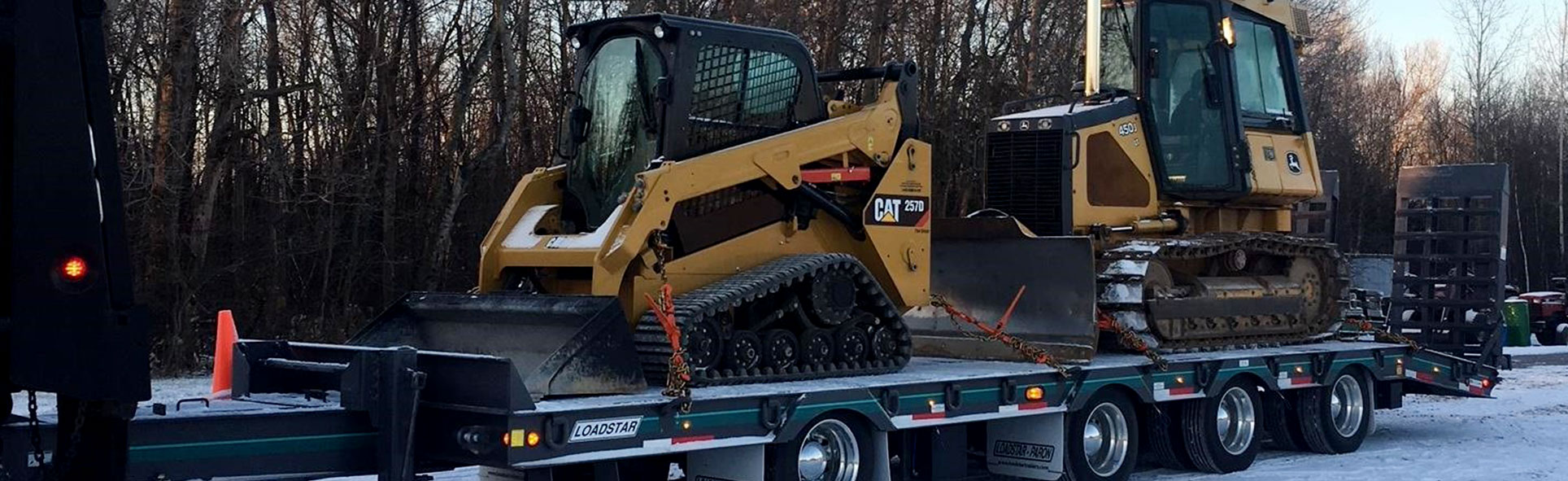
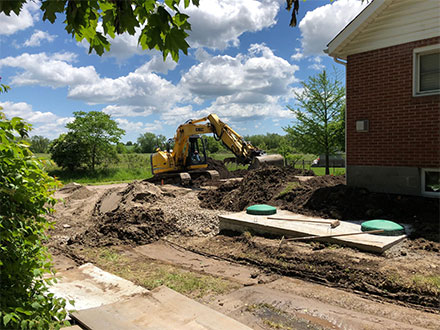
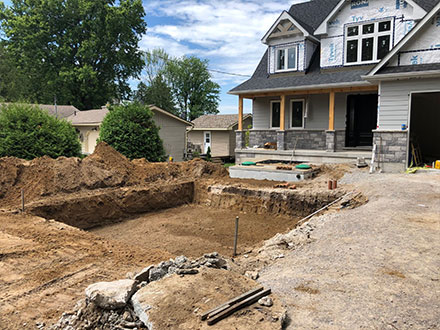
Heavy equipment is used to:

  • Install tanks, drain field and grading.

4. Tank Installation

  • The tank (usually concrete, plastic or fibreglass) is placed into the excavated hole.
  • It’s leveled carefully to ensure proper flow.
  • Inlet and outlet pipes are connected.

Inside the tank:

  • Solids settle to the bottom (sludge)
  • Oils float to the top (scum)
  • Liquid effluent exits to the drain field

5. Drain Field Installation

  • Perforated pipes are laid in gravel-filled trenches.
  • These pipes distribute wastewater slowly into the soil.
  • The soil naturally filters harmful bacteria, nutrients, and pathogens.

6. Inspection & Backfilling

  • The system is inspected by the local health unit before being covered.
  • Once approved, soil is backfilled over the tank and trenches.

7. Final Connections & Testing

  • The system is connected to the home’s plumbing.
  • Water is run through to ensure everything flows correctly.

8. Maintenance Setup

After installation:

  • Tanks need pumping every 3–5 years.
  • Avoid flushing non-biodegradable items.
  • Protect the drain field (no heavy vehicles or structures).

Key Risks if Done Incorrectly

  • Groundwater contamination
  • System backups into the home
  • Premature failure (very expensive to fix)
septic-2
septic-3
septic-4